How do you design a guest space that’s as sustainable in ten years as it is on day one?
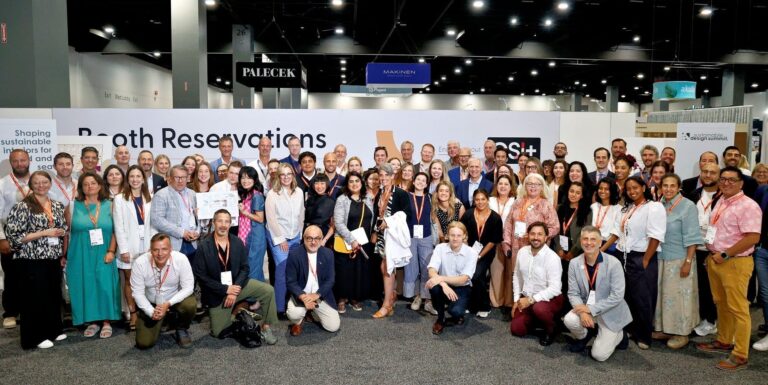
That was the question at the heart of the latest Sustainable Design Summit Working Group in Miami, where brand owners, interior designers, specifiers, and suppliers came together to explore what it takes to create a genuinely sustainable hospitality space from first concept through to end-of-life.
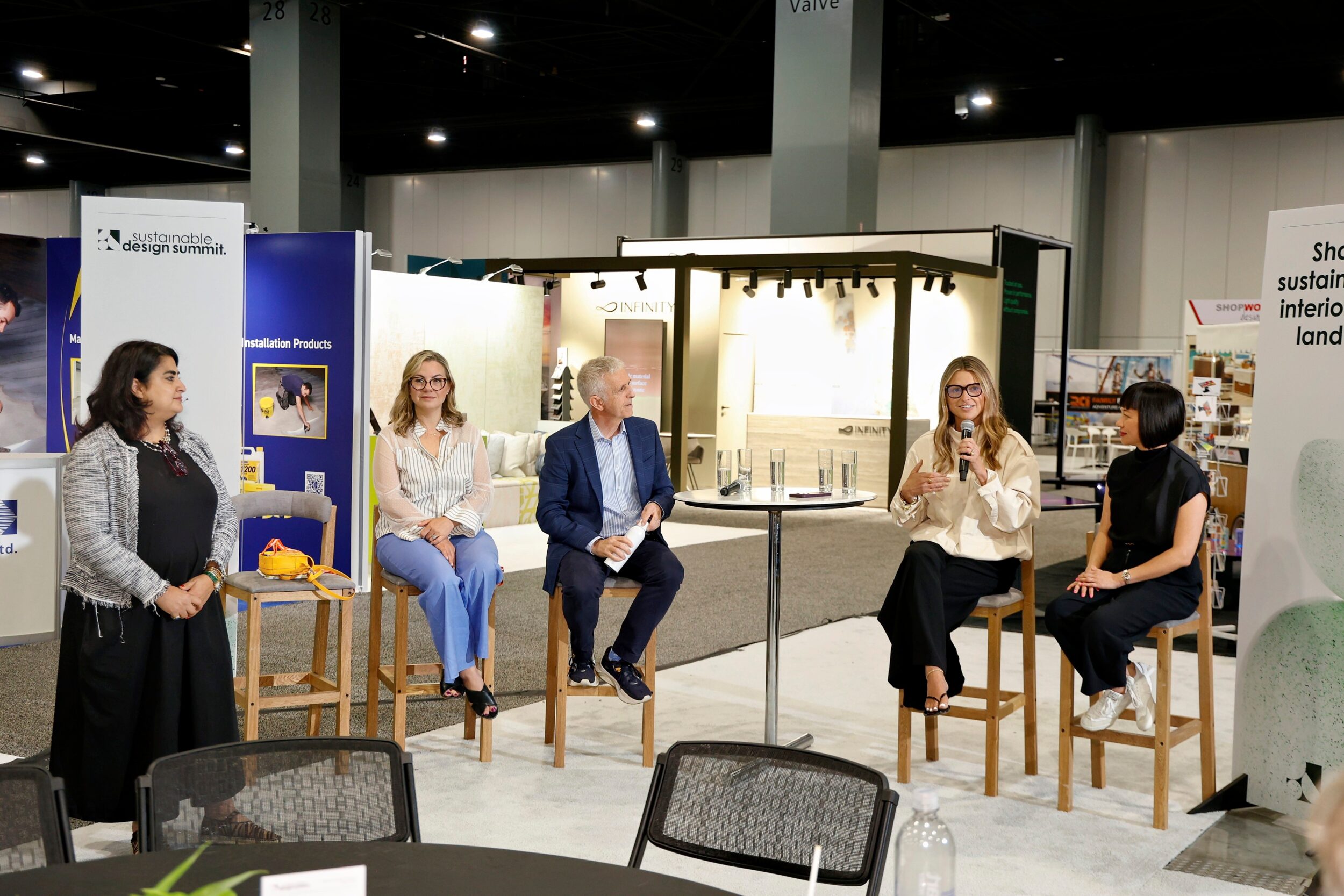
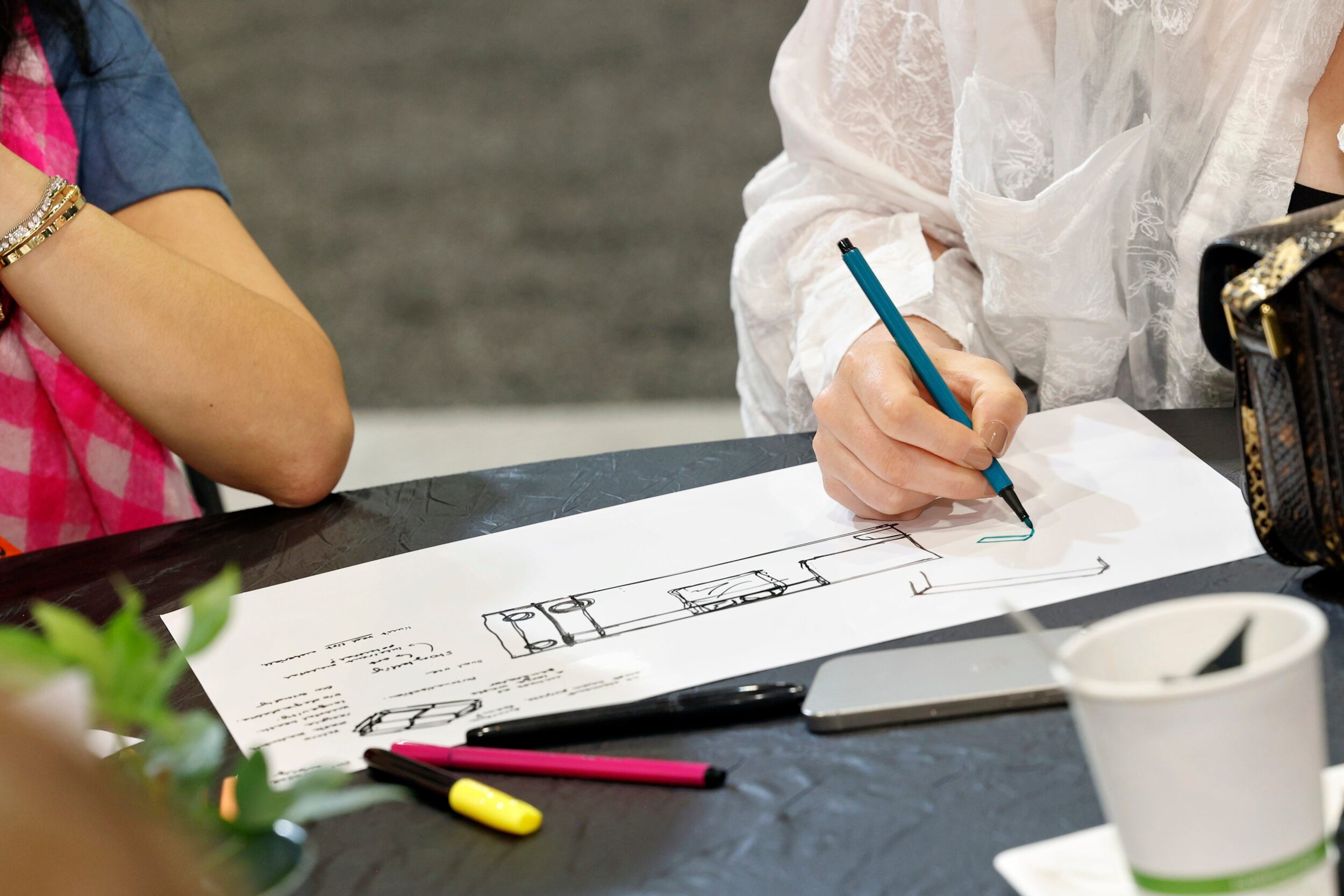
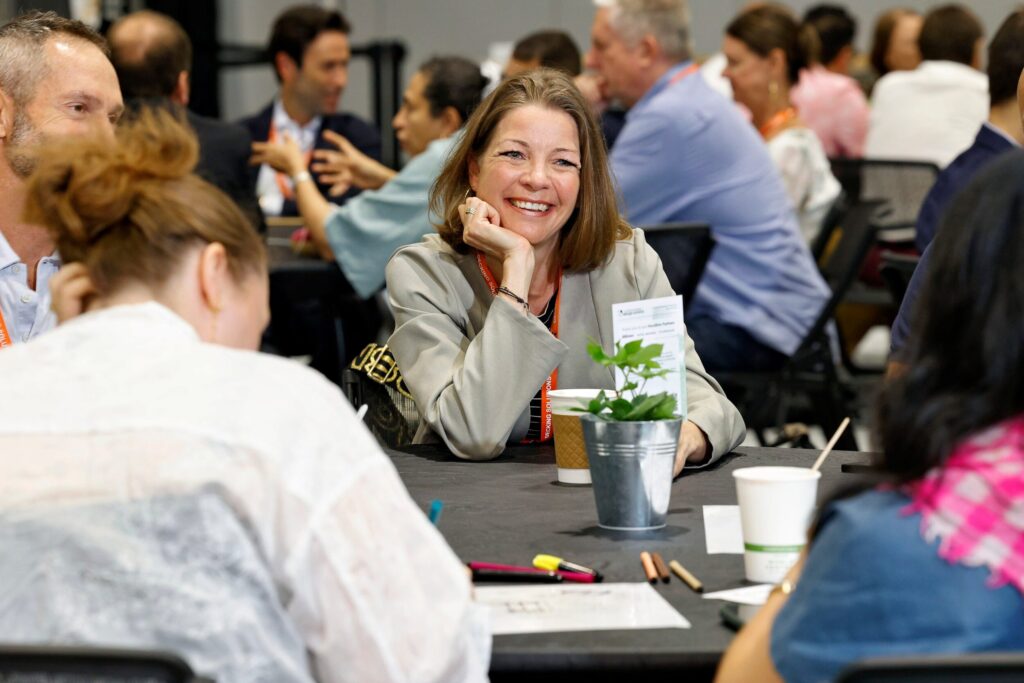
Led by Aliya Khan, Hospitality Design Leader, (formerly Marriott), participants worked in multidisciplinary teams, and were tasked with designing a compact guest room and wet room while considering every stage of its lifecycle. From material selection and guest wellbeing to refurbishment, reuse and eventual disassembly, every decision was viewed through the lens of measurable sustainability.
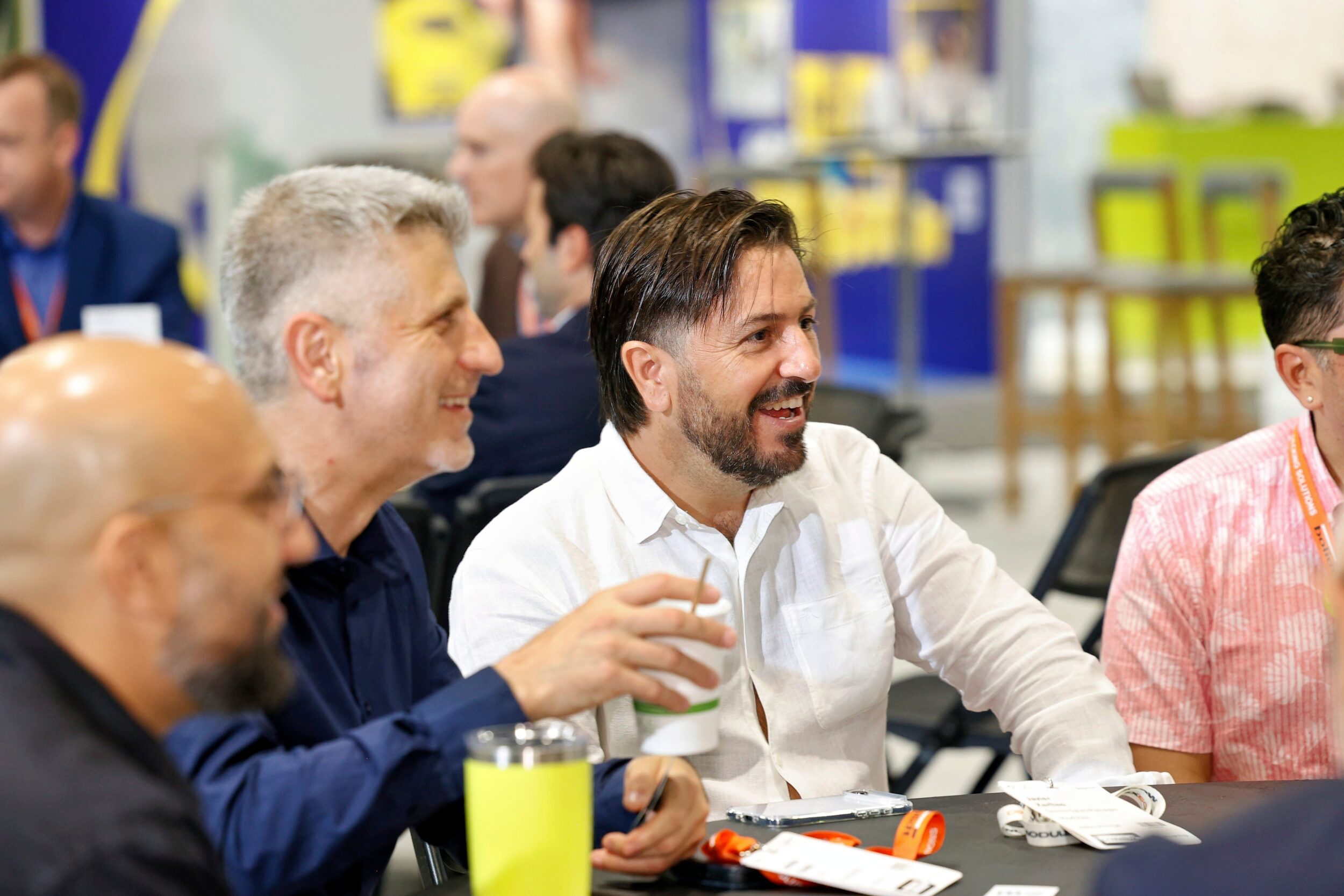
Each table brought together different experiences, priorities and perspectives from across the industry. Designers exchanged ideas with manufacturers, suppliers considered solutions alongside operators, and procurement perspectives met creative ones. Yet despite approaching the challenge from different angles, many arrived at remarkably similar conclusions.
Three key themes emerged throughout the morning, highlighting how small, deliberate decisions can contribute to bigger sustainable outcomes.
1. Design for what comes next
If a space is designed only for the moment it opens, what happens when it needs to change?
Longevity was a recurring theme throughout the Working Group, with participants considering how spaces can be designed to evolve rather than be repeatedly replaced. The idea of layering was central to this: creating timeless foundations that can remain in place, while finishes, furnishings and other details can be refreshed as needs and aesthetics change.
Modularity can play a similar role. Designing furniture, fixtures and components so they can be repaired, replaced or adapted individually means a whole space doesn’t need to be stripped out when one element reaches the end of its useful life.
This way of thinking also changes how we approach refits. Instead of starting again, designers can look at what already exists and ask what can be reused, repurposed or given a second life. Maintenance and future adaptability become part of the design brief from the outset, rather than considerations that arrive later.
Ultimately, designing for longevity isn’t about predicting exactly what a space will need in ten years. It’s about giving it the flexibility to change.
2. Materials: More than the sum of their parts
Choosing a more sustainable material isn’t simply a case of finding an alternative and calling the job done. The Working Group highlighted the importance of looking at the bigger picture: what is a material made from, how long will it last, where has it come from, and what happens to it at the end of its life?
Material health was an important part of this conversation. Participants explored the need to consider factors such as Red List chemicals and VOCs, as well as indoor air quality, recognising that sustainability and wellbeing are closely connected.
Data also has an increasingly important role to play. Sustainable materials need to do more than sound good on paper—they need to be supported by credible information, meet the necessary requirements and codes, and perform throughout their intended lifecycle. Durability matters too: a material that lasts longer can ultimately reduce the need for replacement and the resources that come with it.
The discussion also looked beyond the material itself to consider how products are sourced and transported, with local sourcing offering opportunities to reduce transportation impacts while strengthening connections with local communities.
Ultimately, making more sustainable choices means asking better questions before specifying a product. It’s about understanding the full story behind a material, weighing up its environmental and social impact, and choosing the solution that makes the most sense for the space and its lifecycle.
3. Small decisions can drive bigger change
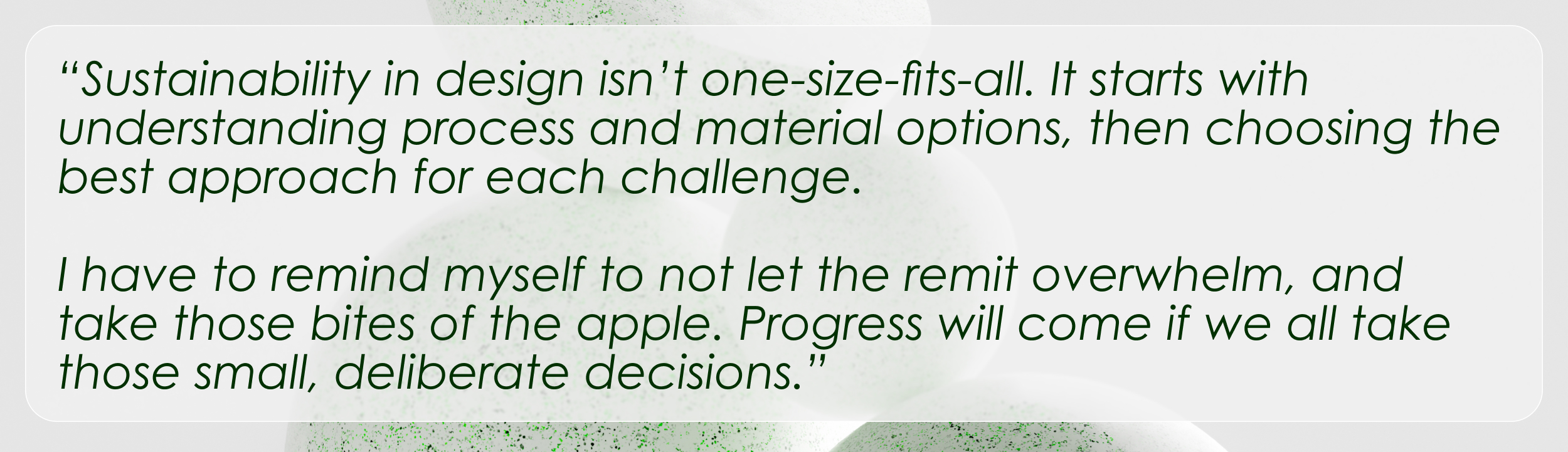
With so many factors to consider, it’s easy for sustainability to feel like an overwhelming brief. But perhaps one of the most important messages from the Working Group was that progress doesn’t have to happen all at once.
As Aliya Khan, Hospitality Design Leader, reflected after the session:
The exercise demonstrated exactly how those small decisions can add up. Participants approached the brief from different perspectives, sharing their own priorities, expertise and ideas for creating a more sustainable space, while identifying practical ways to improve the outcome.
It reinforced the value of bringing different perspectives into the design process from the very start. Designers, suppliers, manufacturers and operators each have different knowledge and influence, and involving these voices early in the concept and specification stages can help turn sustainability from ambition into achievable action.
Better decisions also depend on better information. As new requirements around sustainability information and transparency come into play, suppliers and manufacturers have an important role to play in providing clear, credible data about their products. Giving designers and specifiers access to information about material composition, performance and lifecycle can help them compare options, understand the wider impact of their choices and specify with greater confidence.
Because ultimately, there may not be one perfect answer to sustainable design. But there are plenty of better decisions we can make along the way.


The next SDS Working Group will take place in Hamburg on Thursday 3 December 2026, alongside CSI Design Expo Europe. Register your interest to be the first on the list.