
As of 27 September 2026, the EU’s update to the Empowering Consumers Directive will apply to manufacturers and consumers across all member states. The directive is designed to provide consumers with ‘clear, relevant and reliable information’, enabling them to make fair decisions when purchasing sustainable goods and driving competition in the sustainable goods markets.
Many of the new directives put the spotlight on how businesses communicate their sustainability claims. However, a portion of the directive takes aim at commercial practices of planned obsolescence and repairability.
So, how does this impact hospitality interiors suppliers?
Hospitality interiors manufacturers and suppliers working in fabric and furnishings, wall coverings, floor coverings, outdoor furniture and shades, stone and surface materials and other cabin amenities are most likely to be impacted by the sections of the directive relating to sustainability claims and sustainability labelling.
Vendors dealing in lighting, smart room controls, galley equipment and attractions, entertainment and lighting technology will also be concerned with the sections of the directive regarding planned obsolescence and durability. The examples in these sections take aim at practices such as performance-limiting software updates and features introduced to limit the life or capability of a good.
Sustainability claims must be clear and trackable
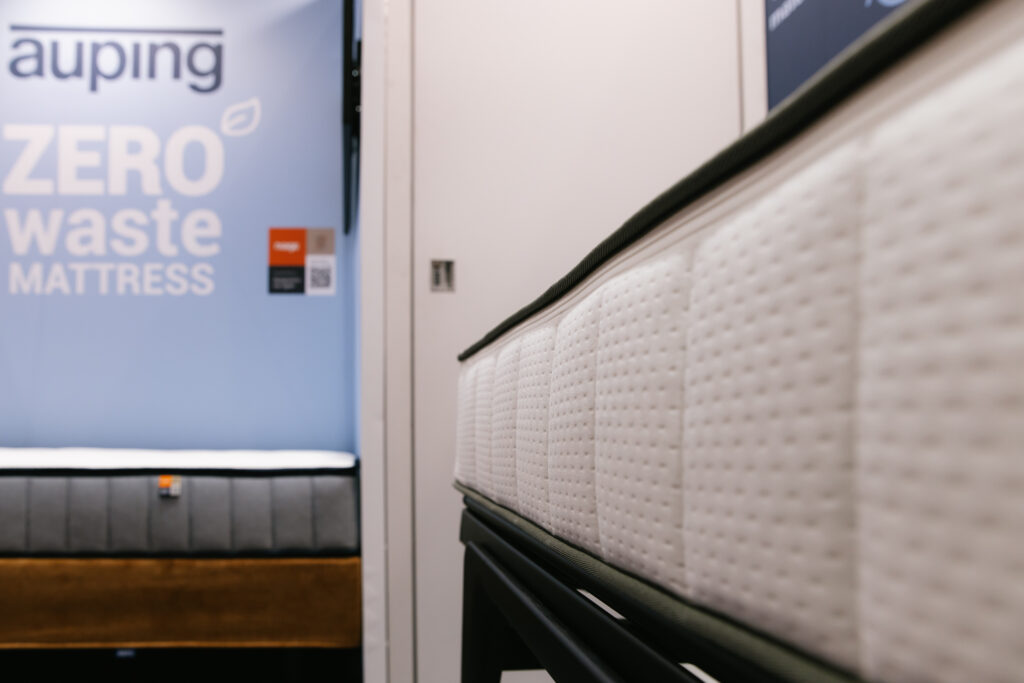
Manufacturers may no longer make generic claims regarding the sustainability of a material or product, but must demonstrate clear and verifiable information in the product communications. For example, companies claiming their material is ‘eco-friendly’, ‘climate-friendly’ or ‘biodegradable’ would fall foul of the new directive. Instead, in this case, a company may inform their customers what percentage of the material is made from recycled plastics.
Where companies are making specific sustainability claims, they are now required to make any information supporting this claim available to the consumer. This information must be clear, trackable and understandable to the consumer. For example, a product such as a soft-furnished chair may consist of several different materials, including a wooden frame, cushion and fabric covering. However, if the fabric covering is made using recycled materials, a company cannot label the entire product as ‘made using recycled materials’, and must instead list what percentage of which material is made using recycled materials.
Key takeaway: Manufacturers must supply clear and specific information regarding the sustainability of the materiality and manufacturing processes.
Sustainability labels must be verified through recognised certification schemes
One of the most relevant incoming regulations for hospitality interiors suppliers is that a product cannot possess a sustainable label unless it is one based on a certification scheme or established by a public authority. In-house labels designed to communicate a product’s environmental credentials must be replaced by the specific and traceable information mentioned in the previous section.
A manufacturer cannot apply the label when the product meets the certification requirements without having undergone the certification process. A manufacturer also cannot apply a sustainability label if their product meets voluntary market-based standards for green and sustainable bonds.
There are many certification options available to hospitality interiors manufacturers who aren’t sure where to start. One certification body that works closely with the hospitality interiors industry is Cradle to Cradle Certified.
Key takeaway: A product may only feature a sustainability label if the label has been awarded by a certification scheme or public authority.
Early or planned obsolescence practices must be curtailed

These sections of the EU ECGT Directive take hard aim at manufacturers who include planned obsolescence practices in their business model, particularly those using software updates to do so. Manufacturers must clearly communicate with consumers where a software update may impair the performance of their goods. Traders may require essential software updates that keep the product conforming to security guidelines, or essential functionality. However, they may not mandate software updates that enhance functionality, or introduce a feature that limits the durability of a good.
Key takeaway: Suppliers who manufacture goods involving software cannot use software updates to limit their products’ functionality, and therefore lifespan.
Goods must be durable and repairable

The directive identifies products with a deliberately limited lifespan as having an ‘overall negative impact’ on the environment. These practices increase waste, increase use of energy and materials and are detrimental to the consumer. As a result, hospitality interiors manufacturers looking to bring their products in compliance with the updates should take the time to assess their products’ durability and repairability.
These sections of the directive bring technology-forward products under the microscope. Firstly, all products making a claim regarding durability – such as the number of spin cycles of a washing machine – must meet that claim under normal operating conditions. Secondly, manufacturers must also provide information at purchase about how a product can be repaired, including after-sales services and repairability score.
Key takeaway: Manufacturers must provide clear and accurate information regarding any products’ durability and repairability claims.
Staying ahead of the regulations
Supplier and designer understanding of sustainability continues to evolve. Initiatives such as the Sustainable Design Summit offer a forum for stakeholders across the supply chain to share perspectives and knowledge swap. The next Sustainable Design Summit will take place on 3 December at the Hamburg Messe. Titled Takeback Schemes: Turning Design Decisions into Investment Decisions, the gathered delegates will analyse the product lifecycle, develop a deeper understanding of how to unlock greater value and embed circular thinking into design and workflows.
Register your interest via this form.